
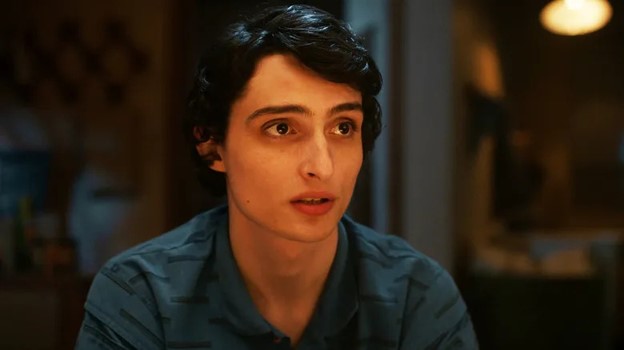
Fig. 1: Mike considers an alternate ending for Eleven.
Okay, I’ll admit it. A few days after the final episode of Stranger Things aired in December, I was caught up in the fan frenzy of “Conformity Gate,” that online theory that the final episodes amounted to a Vecna-inspired fantasy in the mind of Mike Wheeler. As I went down that rabbit hole—or was it a wormhole?—I watched YouTube video after YouTube video about narrative inconsistencies and prop color changes and scrolled through social media posts about the repetition of the number seven. By the time that I sat in front of my laptop in my tinfoil hat on the night of January 7th, I was ready to believe that the Duffer brothers had pulled off the greatest TV hoax since Geraldo Rivera tempted audiences with the historical treasures hidden within Al Capone’s vault.
And, clearly, I was not the only one. As The Guardian’s Benjie Goodhart, among others, reported, “[S]o many fans tuned in to Netflix [on the 7th] to check [for another episode] that the site reportedly crashed.”
On the surface of it all, it seemed culturally unprecedented for a TV finale to make people believe in the unbelievable and to get them to change their routines for an episode that never existed, but finales have, of course, moved people to other unusual behaviors before. According to The New York Times, after the controversial “cut-to-black” ending of The Sopranos in 2007, viewers were so motivated to respond that “HBO’s Web site crashed for about half an hour due to heavy traffic on the official ‘Sopranos’ online chat room.” Watching the last few minutes of that episode in my living room that night, I, too, was ready to make an angry call to my cable company about an ill-timed loss of service, that is, until the closing credits rolled.
In this regard, in creating such a phenomenon and giving us an ending to their series, the Duffers didn’t just write themselves into the history of sci-fi horror on TV; they added their names and their series to the history of the television finale itself, a genre all its own. If a TV show has had any impact on us at all, then its finale often leaves us in this “stranger” emotional/psychological/critical space, to debate the most appropriate conclusion to the stories that entertained us, to consider the fates of the characters that we cared about, to reflect on the meaning of that narrative in its entirety, to say goodbye to a series that was a part of our lives for so long.
In 2018, I co-edited the essay collection Television Finales with the critic David Bianculli, and, in going over so many finales for the book, certain themes began to emerge, which I discussed in the introduction and which I find myself thinking about yet again in the aftermath of the Stranger Things ending. As we continue to process what we saw or didn’t see in that last episode, to mourn the loss of the show, and even to cope with our ST withdrawal by bingeing episodes of the animated Tales from ’85 spin-off, consider these three points:
1. Finales, as I mentioned in the book, “are not so final” (5). In the first place, as unhappy as audiences might be with all of the ambiguity surrounding the end of Eleven’s narrative, ambiguity is a good part of the TV finale. Since I already mentioned it, look no further than the end of The Sopranos, which may or may not have been the end of Tony Soprano, as he enjoyed some onion rings with his family in that New Jersey restaurant. For all the awful things they did and whatever punishments they received, Vic Mackey was still alive at the end of The Shield, Greg House was still alive at the end of House, and Don Draper was still alive at the end of Mad Men. While their stories may have stopped there, there is and always will be the possibility of more for those characters. A younger version of Tony Soprano appeared, in fact, in David Chase’s The Many Saints of Newark prequel in 2021.
Although there was some fanfare to their original endings, other shows, like Gilmore Girls, Sex and the City, and Justified, have given us more by restarting their narratives and showing where their characters are later on in life. In doing so, they have also proven that “the end” is not the end, regardless of how definitive it might seem.
Perhaps the best example of this idea is Dexter, which appeared to end in 2013 with a forlorn Dexter Morgan deciding to fake his own death in Miami and live out his days elsewhere as a lumberjack, a self-imposed sentence for his countless crimes. Showrunner Clyde Phillips, who left the series after Season Four, returned to give him a more pointed ending in the miniseries Dexter: New Blood (2021-2022), as the serial killer convinced his son, Harrison, to shoot him in the final episode. When Deadline, in an interview, wondered about the possibility of Dexter’s return, Phillips did not mince words: “I wouldn’t do that to the audience. It would be dishonest. Here, there is no question that this is the finale of Dexter. Dexter is dead.” Like David Chase, Phillips still revisited the character through a prequel in 2024-2025’s Dexter: Original Sin—and the Duffers and showrunner Eric Robles are exploring that option, too, in Tales from ’85—before hedging his bets on the gunshot that killed him and bringing him back to life in the Dexter: Resurrection series that aired last summer. There’s no need, then, to worry about the hereafter on TV; death is just a problem for some other writers’ room.

Fig. 2: Dexter returns in Dexter: Resurrection.
As streaming continues to make the search for ratings on TV a significant challenge, reviving a show also creates a product with a built-in audience, an attractive prospect for the showrunners and the services themselves. Nearly ten years ago, in an article that I quoted for the book, Alan Sepinwall considered the networks’ reliance on “familiar names […] to cut through the Peak TV clutter.” Reflecting on the consequences, he presciently predicted that “future showrunners [would] be reluctant to wrap things up in a bow in their finales, just in case that Netflix money might roll in 10 or 15 years down the line, and finales [would, as a result,] become less memorable in service of a theoretical future pay.” Although the series proper appears to be over, Mike’s decision to believe in Eleven’s survival always gives the Duffers a way back in, should Netflix make them an offer they can’t refuse. Ross Duffer has even joked about the possibility of a restart down the road “if [they’re] all broke.” For the right amount of money, maybe the Party would be willing to take their binders off the shelf just one more time.
2. Even if there had been some truth to those Conformity Gate theories and another episode had aired, regardless of how it went down, it likely would not have satisfied ST fans’ vision of the perfect ending. As I said in a CST Online piece on penultimate episodes, if we have invested ourselves in a TV series, then we probably have a vision in “our minds [of] the ideal ending, the one that best suits our sense of what it was and what it meant to us.” That vision may not agree with our best friend’s or our neighbor’s or the TV critic’s, and none of those visions may go along with how the showrunner sees the ending. In the end, the audience measures their view of the end with that imaginative ideal. Quite often, the actual finale fails to measure up. (After all, how often does the actual or the real live up to our imaginations?) While a second finale might have satisfied our desire to keep the show going and offered a take that was more satisfying to some, it would also have been disappointing to others, especially those who enjoyed the finale and felt that it was closer to and perhaps even better than their imaginative sense of where the story should have gone.
3. To a large extent, the point of any finale, as crazy as this may sound, may not be viewer satisfaction. It may just be a matter of keeping the series in our cultural consciousness. As long as we continue to talk about the series and the finale, it was successful. While praise from the audience and the critics is something to be desired, the conversation, the preoccupation, even the obsession about the ending may be the real endgame. Anytime a TV series announces a finale, for example, the critical response inevitably turns to David Chase’s Sopranos. In his review of the ST finale, The Guardian’s Stuart Heritage, for example, wondered, “Will this final episode become as beloved as Breaking Bad, or as widely discussed as The Sopranos? Almost certainly not.” In literally leaving us all in the dark about Tony’s fate, Chase created an ending that continues to be a part of any television finale conversation. Several years after it aired, critic Martha Nochimson got Chase to admit that Tony was still alive in a Vox article, and that this was newsworthy points to the episode’s enduring impact. Even if his enemies put Tony down that night, we couldn’t and still can’t seem to let him go.
Although the Stranger Things finale is already six months old, people—like me—are still talking/writing/griping about it, and the Duffers don’t seem to be in any rush for us to forget about it either. Netflix’s documentary, One Last Adventure: The Making of Stranger Things 5, which aired in January, only added fuel to the fire about the last episodes because, as Collider’s Greer Riddell notes, it “confirm[ed] that the final season was produced in a prolonged state of uncertainty.” We’ll have to see if the ST ending, warts and all, has (spider) legs and if we are still having a conversation about Eleven’s whereabouts ten years from now. We certainly won’t be done with it or the series anytime soon, as Tales from ’85 takes us right back to its heyday, when all the residents of Hawkins had to worry about were Demogorgons and government conspiracies.
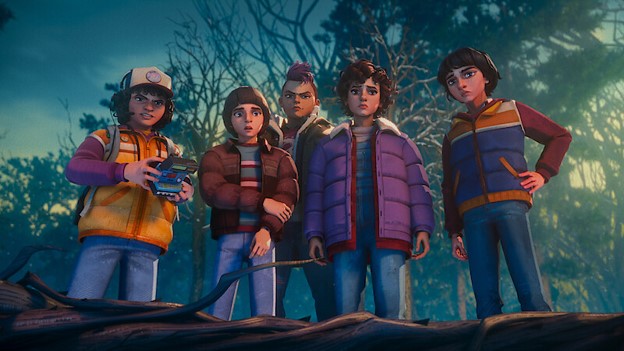
Fig. 3: The Party returns in Tales from ’85.
As I continue to reflect on the last episode, one of the things that I keep coming back to is that final scene in the basement, especially for what it says about the main characters and, perhaps, about finales as well. After the group file their binders on the shelf and climb the stairs for the last time, Mike takes one long look back to see Holly and her friends take over and pick up the Dungeons and Dragons game, a “changing of the guard” that dramatically points to the passing of time, for them as well as for us. As much as Mike says goodbye to his childhood there and surrenders that space for the next generation to enjoy theirs, he also says goodbye to us, since, presumably, he and this version of ST won’t be coming back.
Finales are, as I called them in the Finales book, “cultural milestones” (467), shared moments in time when so many of us come together to experience a television narrative that has meaning for us. In times past, before streaming, that sharing was more defined and deliberate, as the scheduled airing of the episode required, even demanded that we all sit in front of our TVs at a specific time and day to see an ending play out. We couldn’t watch the show at our leisure on multiple platforms. “[W]e needed to be there,” as I noted, for the moment, and, if we missed it, there was no going back (468-69). For this reason, some of those finales had staggering audience numbers. As USA Today’s Jorge Ortiz reminds us, “[N]early half the U.S. population [about 106 million] […sat] down to watch the final episode of M*A*S*H.”
While an audience of that size may no longer be possible in the post-Peak TV age, to their credit, Netflix, in hyping the final season and the finale of Stranger Things, created the same sense of urgency and opportunities for shared viewing, as people organized watch parties and made the series a part of their holiday plans. I watched the finale with family on New Year’s Eve. The cast held their own watch party with the Duffers, “huddled up close at the Paris Theater in New York City.” Netflix also screened the finale “in approximately 600 cinemas across North America” to give people the opportunity to watch the end together. According to an AMC press release, “According to an AMC press release, “more than 753,000 Stranger Things fans” saw the finale in one of their theaters from New Year’s Eve to New Year’s Day. ”
However we experienced it, by ourselves or with a group, if we went out of our way to be a part of that audience, we will probably always remember where we were that night, when we saw “The Rightside Up” drop for the first time. In the show’s final moment and Mike’s look back from the basement stairs, we all said goodbye to whatever portion of our lives we spent with him and his friends there and to who we were when we watched the series. And, if there is something that does end in a finale, something that it stands for, perhaps it is this, the ending of a period of time that mattered so much and had meaning—for those who created as well as for those who consumed. And this is something unique and valuable, something to be treasured, something that should be commemorated with fanfare and celebrations and watch parties.
Whether you loved it or hated it, the viewer response to the ending and the need to manifest more clearly prove that the series made us all feel something, reminding us yet again, in various ways, that we are all human. The ongoing theories, questions, petitions, and complaints make sense, in this regard. After all, who would want to give that up?
Douglas L. Howard is academic chair of the English Department on the Ammerman Campus at Suffolk County Community College. He is the co-editor of Television Finales: From Howdy Doody to Girls, co-editor of The Essential Sopranos Reader, and editor of Dexter: Investigating Cutting Edge Television.
Work Cited
Howard, Douglas L., and David Bianculli, editors. Television Finales: From Howdy Doody to Girls. Syracuse UP, 2018.