
While talking television with Andrew Pixley (always a delight), the conversation touched on how television, as a medium, is particularly reactive to its audience. This reactivity is most likely attributable to television’s format of multiple installments running over (typically) a number of years, which gives audiences the opportunity to influence shows between seasons, and sometimes even during the production of seasons. The question is, should audiences be able to influence a show’s creative direction? If so, in what way?
I believe a television show, like any other creative work, is ultimately the product of the people who are making it and should follow their vision. Fans therefore have no right to dictate to the production team or abuse them for their creative choices, though they can obviously dislike those choices or quit watching the show altogether. However, I do believe that audiences, like a good book editor, should be able to hold the creatives to account when they deviate from their stated reasoning for their creative decisions and distort the show’s characterisation, ethos, etc. in ways that violate what has been established. In essence, there should be give and take between the parties, with creative freedom largely afforded to the production team and fans justified in pushing for creative decisions to be reassessed when the show and its characters endure unwarranted and illogical distortion.
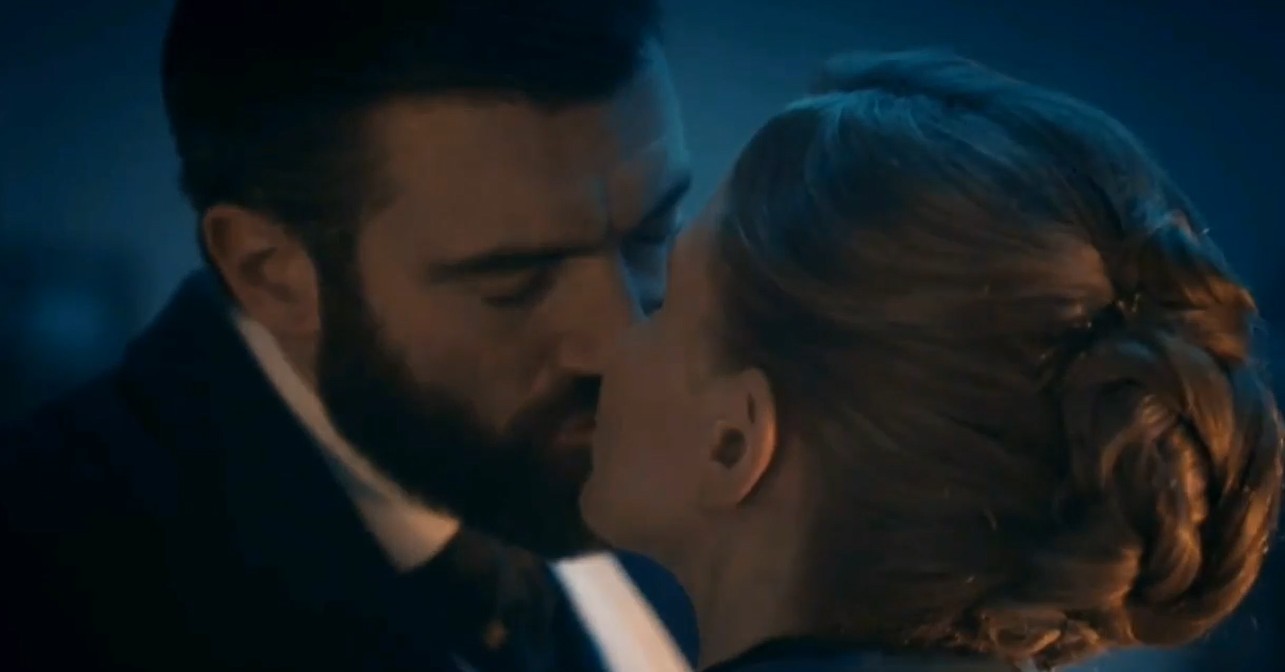
Fig. 1: “Miss Scarlet and the Duke” sealed the long-simmering romance between the two title characters with a kiss, before dropping the Duke from the show and the title, a creative decision that earned the ire of fans.
I pondered how that balance should be struck in practice while watching season six of Miss Scarlet (2020-2027), formerly Miss Scarlet and the Duke. As originally conceived, the series follows Eliza Scarlet, a woman in Victorian London who takes over her late father’s private detective agency to support herself. As a female detective, Eliza fights to be taken seriously and often goes to her childhood friend, Scotland Yard detective inspector William “the Duke” Wellington, seeking cases and assistance. William is annoyed by Eliza’s penchant for interfering in police business and putting herself in danger, though romantic feelings underlie the pair’s conflict-habituated relationship. However, after four seasons, William portrayer and executive producer Stuart Martin opted to leave the series, believing that a romance between the characters could not be teased forever, but, if realised, would culminate in them becoming a “married, bickering couple” or breaking up. As Martin thought neither option would make for a satisfying watch – and that Eliza, as written, would not compromise her career ambitions for a relationship in any case – but was uninterested in maintaining the status quo, he chose to take the decision out of the creative team’s hands by exiting the production. Martin’s decision resulted in the season four episode “The Diamond Feather”, in which William tells Eliza that he is taking a job in New York as he can no longer bear spending time with her without being in a romantic relationship with her, but knows they cannot be together as long as he is a policeman and she is a private detective. His choice therefore relieves her of the burden of choosing between her career and him. He also suggests that the physical distance will give them time to consider their options regarding their relationship. In addition to releasing the characters from their relationship holding pattern without necessitating a breakup or unhappy relationship dynamic, Martin argued that William’s absence would open up new story possibilities for Eliza: “[T]here’s a place to tell different stories, I think, for Eliza, to see what that is like without Duke, to kind of allow her to be not held back by Duke.” Creator and writer Rachael New added that Eliza having to carry on without William was in keeping with the series’ ethos as a feminist show focussed on its heroine’s perpetual fight against the odds:
“[T]his is a feminist show…about a woman’s survival. And there’s something…quite poignant…that people can relate to, which is that things don’t work out sometimes. And it’s about her picking herself up and dusting herself down, and getting on with her life, and making the best of things. And I think it fits perfectly with…Eliza…in terms of her character. So, it’s another arrow that’s been slung at her, but she does prevail. And I think that’s very, very much in keeping with the themes of the show.”
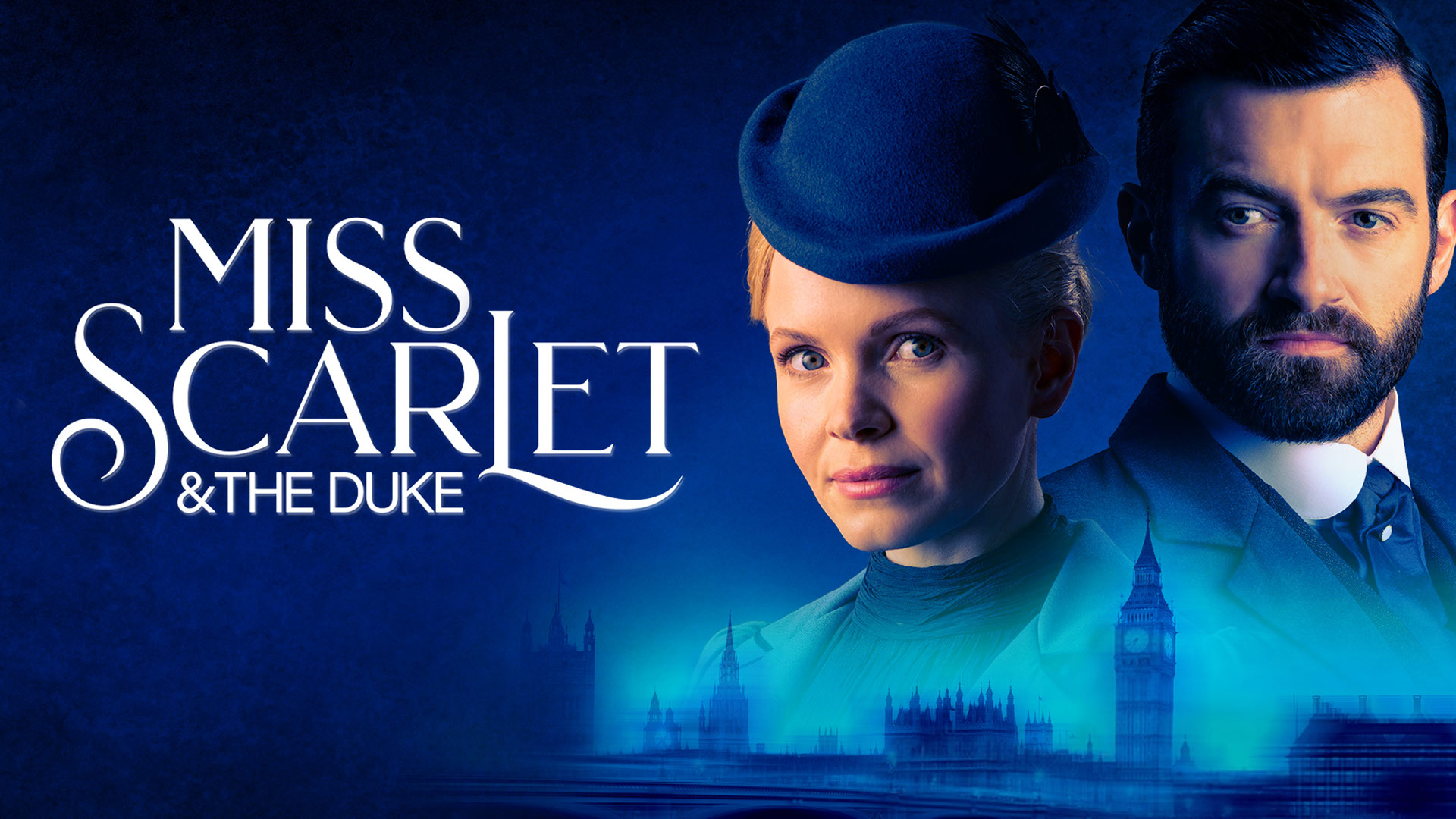
Fig. 2: The series’ original logo, with the prominent “Miss Scarlet” on top and the “& the Duke” tucked underneath in much smaller font.
Naturally, Martin’s departure earned ire from fans, who argued that William and Eliza’s relationship was the heart of the show and that William was a co-headliner, as evidenced by the presence of his name in the title, so the show could not function without him. New’s description of the show as a feminist one “about a woman’s survival”, however, indicates that she not only intended Eliza to be the headliner, but would have wanted to prevent Eliza from being eclipsed by any male character, including William, and therefore would never have considered William and Eliza to be of equal status. That Eliza appears in all episodes, whereas William was absent from episodes in seasons three and four, is further indication that Eliza is the only truly indispensable character and show element in the creatives’ eyes. It is also worth noting that the series’ logo featured “Miss Scarlet” in large, stylised text, while “& the Duke” was tucked underneath it in a much smaller, plainer font. The symbolism is clear: Miss Scarlet is the headliner and the Duke is equivalent to a contract’s fine print – important to take note of, but not the point of the agreement. It is also telling that the logo, at a glance, looks unchanged post-the show’s retitling as Miss Scarlet, as it demonstrates that “the Duke” was always difficult to see, an analogy for the character’s creative-assigned status as a valuable, but ultimately inessential, element.

Fig. 3: Post-Duke, the “Miss Scarlet” logo looks virtually unchanged.
While some fans may be unhappy about the loss of William and the William/Eliza relationship, therefore, there is evidence that his absence is in keeping with the creatives’ pre-established vision of the series, meaning it should be accepted as a valid exercise of creative freedom. Furthermore, while I lamented Martin/William’s departure, I cannot fault the reasoning behind it. Martin’s assessment of the long-term prospects of William and Eliza’s romance was well-thought out, as he recognised the incompatibility of William’s desire for a family life and stable job with Eliza’s career ambitions. Though, as a fan, it is difficult to see a teased relationship between two characters not come to fruition, I agree with Martin that their romance could not succeed unless the characters fundamentally changed what they wanted from their lives. I also agree with Martin that simply watching them flirt indefinitely without any relationship progression would have been unsatisfying, as would the requisite acrimonious breakup or unhappy marriage that many shows implement after their lead characters get together in order to keep things interesting, and that, by departing, Martin gave the show and Eliza potential to do new things. In addition, I agreed with New that Eliza sacrificing a romance with William for the sake of her career and having to cope without him is in keeping with the show’s central premise of a trailblazing woman fighting to succeed in a repressive society. Furthermore, I noted that William was not killed off and told Eliza his departure was only “goodbye for now”, suggesting that the writers were leaving the door open for the pair to reunite after undergoing significant personal growth. I therefore accepted the creatives’ argument and available evidence that William’s departure was consistent with the ethos of the show and William and Eliza’s characterisations, and respected the creatives’ prerogative to continue the show post-William in order to pursue new plotlines and directions in Eliza’s journey.
In season five, the rebranded Miss Scarlet introduced William’s Scotland Yard replacement, Detective Inspector Alexander Blake. Blake and Eliza’s relationship is initially an abrasive one, as Blake refuses to employ private detectives. However, Eliza eventually proves her mettle as an investigator to Blake, and endears herself to him by acting as a female role model for Sophia, Blake’s daughter with his late wife. At the same time, Eliza struggles to accept William’s departure, and is upset when William chooses to remain in New York permanently even though he asks her to join him as his wife, as she knows to accept would mean giving up her career. These story beats feel like natural, post-William developments in Eliza’s life. Late in the season, however, hints of romance begin to appear between Blake and Eliza, with the season’s final scene depicting her sharing a meaningful look with Blake before entering his house. The season six premiere finds Eliza and Blake in the midst of a clandestine romantic relationship. This creative choice struck a sour note, not due to a preference for the William/Eliza relationship or an inherent dislike of Blake, but because it runs counter to Eliza’s characterisation and Martin, New, and others’ comments that forcing Eliza to cope without William opened up new plotlines for her and the show and was in keeping with the series’ feminist ethos. From a plotting standpoint, Eliza’s romantic relationship with Blake does not open up new story possibilities for her or the show, but retreads storylines from her time with William that featured her arguing with a man she loves about the personal and professional impact of her actions on others. If the writers had opted for Eliza to have a platonic relationship, or no relationship at all, with William’s successor, that would have opened up new narrative possibilities by forcing Eliza to run her business and solve problems without the help of a love interest at Scotland Yard.

Fig. 4: In the season five finale, Blake reacts to Eliza’s visit to his home with a shy smile that implies he is romantically interested in her…

Fig. 5: …which Eliza returns before entering his abode.
From a characterisation standpoint, it is unrealistic that Eliza would quickly get over the departure of William and enter into a serious relationship with Blake. Eliza and William’s romantic spark grew and developed over time, starting in their teenage years, resulting in a deep closeness and intimacy with one another grounded in years of personal history. It is therefore unrealistic and out of character that Eliza would seemingly quickly forget this long relationship that meant so much to her as soon as she met someone else, and the creative decision to make her do so retroactively cheapens her relationship with William by suggesting that her previously established feelings for him were not as deep as she professed and was depicted. Eliza’s quick change in feelings also violates her character’s well-established trait of loyalty to those she cares about, and has the side-effect of making it difficult to believe the Eliza/Blake romance will be long-lasting – if Eliza can dismiss her years-long love for William, what would stop her from doing the same regarding her feelings for Blake, a man she has known for a fraction of that time? Eliza’s willingness to enter into a serious relationship with Blake also runs counter to her resistance to romance in favour of maintaining her independence, which was well-established during her time with William. This lack of adherence to Eliza’s characterisation is made worse by the speed of with which her relationship with Blake evolves, with the pair going from complete strangers and a contentious working relationship to being romantically interested in one another over the course of a mere six episodes. This is barely enough time for the pair to become acquainted with and begin to trust one another, let alone embark on a romance. As a result, the relationship does not feel earned or believable, meaning distortion to Eliza’s characterisation is required to make her engage in it. The relationship also weakens Blake’s characterisation by turning him into a cipher for William, his identity subsumed in favour of assigning him William’s job and dynamic with Eliza in order to give the pair’s relationship depth where it has none.
Pairing Eliza with Blake also runs counter to the show’s feminist ethos, which New highlighted upon Martin’s departure. By rushing Eliza from one relationship to another, the series depicts her, not as self-sufficient, but as incapable of fending for herself or having a fulfilling life unless she is romantically entangled – hardly a feminist stance. Furthermore, the focus on her relationship with Blake renders her biggest career move yet – hiring more female detectives for her agency – an afterthought that is only mentioned and carried out in the final minutes of the season, a decision that also butts up against the series’ feminist emphasis.
If the creatives wanted Eliza to enter a post-William romantic relationship that felt earned while opening up new storylines and without compromising her characterisation or the series’ feminist ethos, they could have followed the lead of another series that recalibrated following the departure of the heroine’s love interest: Sanditon (2019-2023). Based on the unfinished Jane Austen novel of the same name, the series follows Charlotte Heywood, a young woman of humble background who is swept into the high society of seaside town Sanditon after befriending the Parker family. In the first season, Charlotte engages in a doomed romance with Sidney Parker (Theo James), who becomes engaged to a wealthy woman in the season finale in order save his brother Tom’s failing seaside resort venture – and Tom himself – from financial ruin. The series was then cancelled and later revived, but Theo James opted not to return. The series’ creatives dealt with James’ absence via a six-month time jump, during which Sidney wed his wealthy fiancée and secured the fortunes of his brother’s resort, only to die of an illness. Charlotte, devastated by Sidney’s marriage and death, resolves to eschew marriage in favour of working as a governess to the wealthy Alexander Colbourne’s daughter and niece. Charlotte initially finds both Colbourne and her charges difficult and hears unflattering stories about Colbourne that reinforce her negative impression. However, the Colbournes gradually warm to her throughout the second season, with Colbourne himself letting his guard down and explaining how his personal and family history have shaped him and his relations. There are tentative moments of romance between Colbourne and Charlotte, but Colbourne’s fear of repeating past mistakes leads him to push Charlotte away and terminate her governess position before things go too far. Charlotte responds by leaving Sanditon. In season three, Charlotte returns to Sanditon having pragmatically and resignedly become engaged to a farmer from her community. Colbourne tells Charlotte he loves her, but Charlotte refuses to break her promise to her fiancé regardless of her feelings. In the end, Charlotte’s fiancé recognises that her heart lies elsewhere and releases her from the engagement, allowing her and Colbourne to marry.
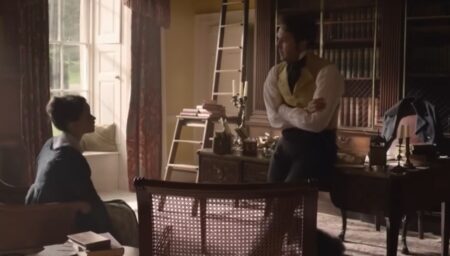
Fig. 6: Season 2 of “Sanditon” begins with Charlotte having a confrontational job interview with potential employer Colbourne, which gets their relationship off to a rocky start.
Sanditon, unlike Miss Scarlet, did not respond to the departure of the heroine’s love interest by quickly pushing her into a romance with another in a way that retroactively minimised her previous relationship, ran counter to her characterisation, was unrealistic, and forced the show to retread storylines. Instead, Charlotte was allowed to grieve Sidney, leave Sanditon, decide to prioritise her career over love, form a bond with her governess charges, gradually develop feelings for her employer, leave Sanditon when Colbourne rejected her, agree to a marriage of convenience to another, and finally, when freed from her engagement, permit herself to love again. Unlike Eliza, therefore, Charlotte had a believable and in-character arc that depicted her grieving the man she lost and opened up new stories for her as she recalibrated her life multiple times in the face of changing circumstances, all before romancing another. The fact that Charlotte took two seasons to Eliza’s one to reach the same place further reinforces how unrealistically speedy Eliza’s progression was and how unearned the Blake romance is. That Charlotte’s paramour was dead and she had no choice but to move on, while William is still alive and could possibly return, only adds to the sense that Eliza moves on from William too easily, particularly given her characterisation.

Fig. 7: Charlotte and Colbourne wed in the season three finale, but it takes them a whole two seasons to move from a contentious employer-employee relationship to married life.
While fans cannot expect the creatives to indulge their every whim, they can hold the creatives behind Miss Scarlet to account for taking liberties with the show’s established ethos and characters, and making choices that contradict the reasoning they gave for their prior creative decisions. This give and take balance can allow for both creative freedom for the production team and the preservation of television’s uniquely interactive relationship with its audience.
JZ Ferguson is an enthusiast of British popular culture with a particular affinity for television series of the sixties and seventies. She has written for all five, and co-edited two, of the volumes of The Avengers on film series. She has also written for the Classic British Television Drama series, penning chapters on shows such as The Saint, Danger Man, The Persuaders!, and Gideon’s Way. Other volumes featuring her work include Man in a Suitcase: A Critical Guide, Swinging TV, Survival TV, New Waves, and A TV Box of Delights: A Golden Age of British Children’s TV. Escapades: An Exploration of Avengers Curiosities, co-authored with Alan Hayes, is available now from Quoit Media. She lives in Canada.