
At this point, it may be prudent to ask what Amazon wants from streaming, other than the kinds of films and series it produces. Unlike other streaming platforms, APV is part of a massive company that sells far more than ‘just’ film and TV, but, well, everything. Of course, APV is not the first entity within a corporate structure. 30 Rock (NBC, 2006-13) made many jokes about General Electric’s ownership of NBC at the time, and not long ago we saw the pressure a Disney+ cancellation can exert over ABC’s programming in the US when Jimmy Kimmel’s late night show was briefly taken off the air. Except that many customers probably only learned that Kimmel’s show was part of Disney corporate structure when it was cancelled. APV’s aims and goals differ from those of Netflix or Disney+.
To put it simply: APV is about something other than ‘bums on seats’, but also selling books, audio books and Amazon-branded gadgets. This also explains why and how APV was initially framed as ‘benefit’ for customers who signed up for Amazon Prime, which, at the time, allowed shipping at no extra cost after the annual subscription price is paid. This already frames the relationship between the video branch or the company and the wider Amazon ecosystem: it directs attention towards other products it sells, which are then shipped at low prices, and for some customers even free. APV has certainly grown in relevance to the company, but it is still relatively unknown how much it drives Prime subscriptions over other ‘benefits’, the number of which have grown immensely over the last decade. However, these services, by now, have become more than ‘benefits’. They serve as a bundle of digital goods and services that drive engagement with the various branches of Amazon. As David Carr points out in his New York Times review of Alpha House (Amazon, 2013-14) in 2013,
Lest you think Amazon is simply being generous, it is important to note that Prime members reportedly spend 150 percent more on the site after joining. You get the drift: Come for “Alpha House” and stick around to buy a big new flat-screen to watch it on (Carr 2013).
This attitude has only increased as Amazon expanded the digital offerings included in Prime. As Bezos put it at the Code conference in 2016,
When we win a Golden Globe, it helps us sell more shoes. And it does that in a very direct way. Because if you look at Prime members, they buy more on Amazon than non-Prime members, and one of the reasons they do that is once they pay their annual fee, they’re looking around to see, ‘How can I get more value out of the program?’ And so they look across more categories — they shop more. A lot of their behaviors change in ways that are very attractive to us as a business. And the customers utilize more of our services. (McAlone, 2016)
To use Karen Petruska’s words,
TV is not a hobby for Amazon, nor is it a side hustle. Instead, it is a thoroughly integrated part of a much larger commercial structure (2023, 426).
It is more than a ‘traffic driver’ at this point, but often a reason for customers to subscribe to Prime in the first place.
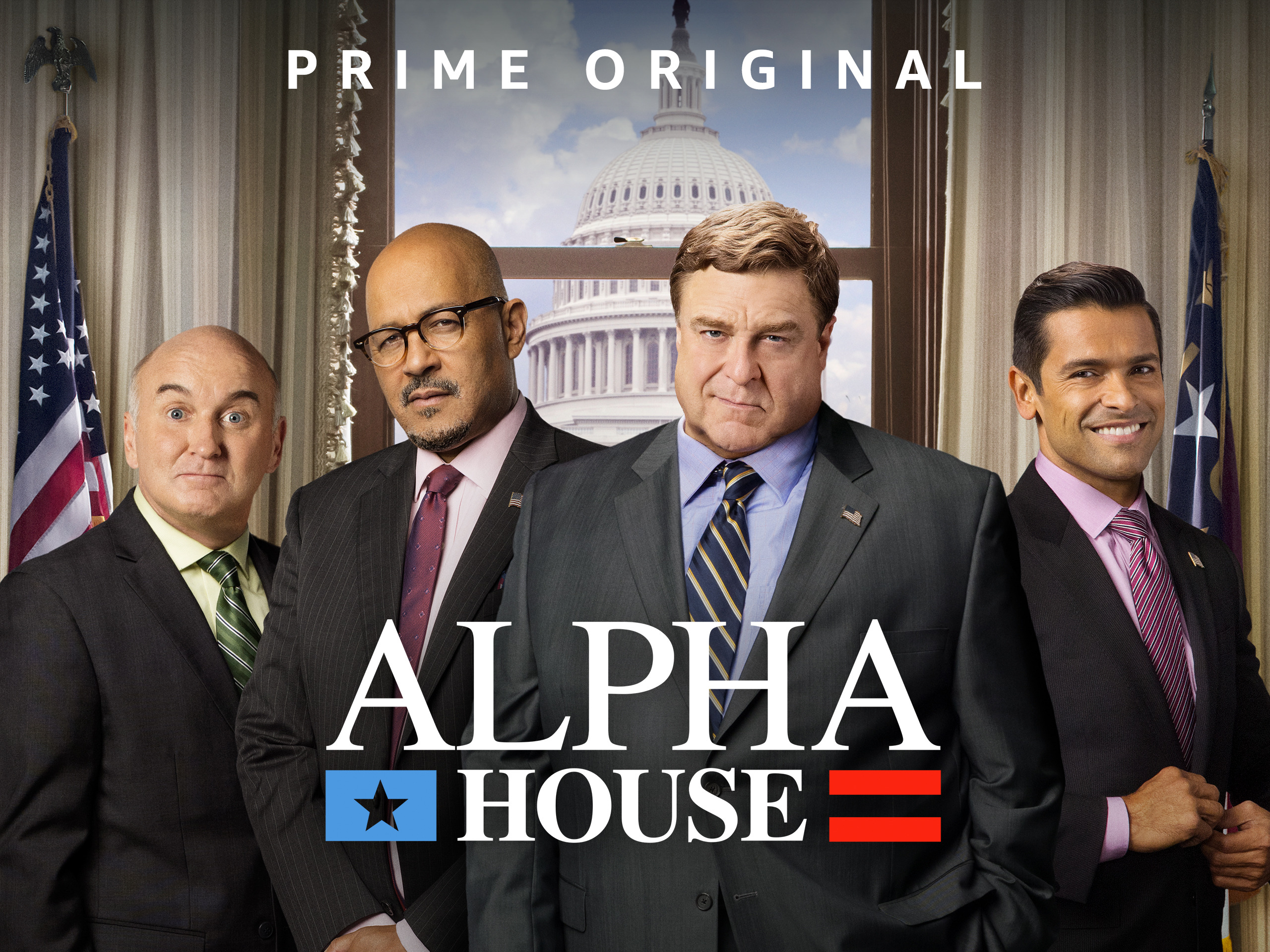
Come for “Alpha House” and stick around to buy a big new flat-screen to watch it on
In the literature on the company, the streaming platform is discussed alongside other entertainment products and services (see West 2022 or Bevini and Swiatek 2021). A major problem is, of course, that each of these technologies needs to be viewed in context of both, Amazon and the cultural universe each platform operates in, particularly as none of these platforms offer the innovation of a market disruptor, but rather, imitates them. In other words, Amazon Music is like Spotify, so the innovation in the industry is due to other companies, not Amazon. Companies like Twitch, Imdb.com, and even the DVD-rental company Lovefilm which predated APV, are acquired, rather than companies built by Amazon. It is difficult to fully grasp this, since researchers tend to be either specialised in Amazon or the relatively new industries and cultural universes these platforms operate in, but rarely both.
Several academic books are available on the streaming wars but often downplay APV’s role. The America-centric Television’s Streaming Wars (2024) edited by Arianne Ferchaud and Jennifer Profitt doesn’t even mention APV, which speaks to the crowded US market. Robert Allen Bookey’s, Jason Phillips’ and Tim Pollard’s collection Triaging the Streaming Wars (2024) also doesn’t mention Amazon and APV but highlights issues of transnational communication within it that may turn out to be central. Amanda Lotz also offers a more industry-based argument in Media Disrupted: Surviving Pirates, Cannibals, and Streaming Wars (2021), which highlights historical developments. A range of articles have also been published on the topic, usually also more industry-based as the term primarily describes business competition. Personally, I am more interested in how different platforms position themselves transnationally, so what their transnational pitch is and how it fits with the field of streaming. It is important to acknowledge that the ‘big’ transnational streamers are American, and the early pitches are to an American customer base, but the streaming companies all need to develop strategies to attract audiences beyond this. The American market is big and diverse, so a well-suited ‘test market’ for transnational content. However, individual markets have different film and television industries, have also adapted important content in different ways that transnational streamers have to reckon with. There also are different value propositions at stake as the field of streamers grows more crowded and customer bases in different countries grow increasingly tired of paying for yet another service. This means getting to terms with different cultures surrounding television, recognising local stars and styles of narrative.
Perhaps, central to understanding the relationship between APV and the wider transnational streaming market is the fact that APV failed to innovate streaming. This is less about the social or aesthetic value of texts like Transparent (Amazon, 2014-19). I am also not saying that the platform failed more generally. It clearly hasn’t. However, in its first few years of streaming, it also didn’t manage to produce narratives to explain what streaming is, leaving definitional and explanatory issues to Netflix. Netflix was the company that found viable means to structure its own platform, using Kevin Spacey to explain to viewers how to watch it. It also was first to self-produce texts and mainstream binge-watching as guiding publication. In the early streaming industry, Netflix had more of an impact than its competitor. However, Amazon is a transnational company that has done much to provide infrastructure to its streaming operation. It is, perhaps, this tension that makes it easier to grasp what APV is. Not the innovator Netflix is but building a new industry with it.
Perhaps most distinctively, access points are important here, as customers outside of the US do not access the same site, amazon.com, but instead access amazon.br, amazon.fr, or amazon.co.uk. Thus, amazon has local websites to cater to local customers. Of course, the American market and how Amazon is positioned in it, matters, but local markets have always mattered to television and streaming, and Amazon is well-equipped to play in those, as I will discuss next week.
Mareike Jenner is a researcher in Media Studies at Anglia Ruskin University. She has widely published on streaming and is the author of Netflix and the Re-Invention of Television (Palgrave, 1 ed. 2018, 2nd ed. 2023) and the edited collection Binge-Watching and Contemporary Television Studies (EUP, 2021).
References
Bevini, B. and Swiatek, L. (2021) Amazon. London: Routledge.
Bookey, R.A., Phillips, J. and Pollard, T. (eds.) (2024) Triaging the Streaming Wars. London: Routledge
Carr, D. 2013. “With ‘Alpha House,’ Amazon Makes Bid for Living Room Screens and Beyond.” In The New York Times. https://www.nytimes. com/2013/11/04/business/media/with-alpha-house-amazon-makes-bid-for-living-room.html. Accessed: 08.11.2025.
Ferchaud, A. and Profitt, J. (eds.) (2024) Television’s Streaming Wars. London: Routledge.
Lotz, A. (2021) Media Disrupted: Surviving Pirates, Cannibals, and Streaming Wars. Cambridge, Mass, MIT Press.
McAlone, N. (2016) ‘Amazon CEO Jeff Bezos said something about Prime Video that should scare Netflix’ in: Business Insider. https://www.businessinsider.com/amazon-ceo-jeff-bezos-said-something-about-prime-video-that-should-scare-netflix-2016-6. Accessed: 18. 11. 2025.
Petruska, K. (2023), “Amazon Prime Video. Scale, Complexity, and Television as Widget.” in From Networks to Netflix. A Guide to Changing Channels. Second Edition, ed. D. Johnson, Routledge, New York, pp. 425–45.
West, E. (2022) Buy Now: How Amazon Branded Convenience and Normalized Monopoly, The MIT Press, Cambridge.