Back in the early 2000s, a new comedy culture emerged within BBC Television as the corporation made dramatic changes in order to reach younger, differently thinking audiences who were drifting away – they were switching to Channel Four and didn’t care for the BBC’s “public-service” brand. This new BBC comedy strand was the result of some bold, risk-taking strategies, including:
- The launch of BBC Three as a “creative space” for aesthetic experimentation.
- Employing a new generation of controllers and commissioners (women and northerners).
- Heavily utilizing then-emerging independent production companies like Baby Cow
- Streaming shows via the launch of BBC iPlayer.
- Finding new creators on YouTube (not the University of Cambridge Footlights).
As I explained in my recent paper at the Critical Studies in Television Conference, I interviewed the first Controller of BBC Three, Stuart Murphy, CBE. He was a new voice, born in Yorkshire and just 26 years old at the time the channel launched – he applied his intuitive understanding of humor, allowing creators to experiment.
I also interviewed Lucy Lusmden, who became the BBC’s first ever Commissioner of Comedy, overseeing all BBC TV channels (previously, BBC comedy had been lumped under the “Entertainment” division). Lumsden was a disruptor too, coming from the private sector, having worked on The Comic Strip Presents (Channel Four, 1982-1988), and as a woman, she broke with the super-masculine, “willy-waving” culture in BBC boardrooms, as they ironically described it.
Lumsden’s approach to commissioning defied that of the BBC boardroom norms; rather than the loudest voice in the room wins, she asserted that the best, new talent should be given an opportunity – especially those who appealed to her “naughty sense of humor.” Notably, this included funny women like Julia Davis in her dark and outrageously original, one-off series Nighty Night (BBC Three, 2004-2005), in which she comically performs a self-obsessed, and oddly vindictive woman.
This new approach would give Julia Davis space in the schedule alongside the regularly hired, “trusted” talents, like Dawn French and Jennifer Saunders who dominated television, admittedly brilliantly – their TV show skits-of-movies echoing the tradition of intermedial parody I’ve previously examined by Mel Brooks. In French and Saunders (BBC Two; BBC One, 1987-1994), their domestic parody of Ridley Scott’s Alien (1979) perfectly mixed their own nonchalance with costumes and context which perfectly captured the spirit of Alien-movie aesthetics. As Lumsden explained to me, these “monolith” comedy acts in the schedule were brilliant, but “there was room for more.”
Revealing the Working-class
Before the 2000s, in-house BBC comedy followed formulas described by Andy Medhurst (2007) to Brett Mills (2022), which were focused primarily on class anxieties, and with joke formats which perpetuated “us”/“them” differences; audiences identify with the middle class, and “other” the working class. This was true for leading series as varied as Til Death Do Us Part, Steptoe and Son, and Only Fools and Horses. While BBC comedy presented working-class characters as loveable, but they were the butt of the jokes, making them inferior, “others.”
This all changed in the 2000s at BBC Three when the infusion of new executives, drawing on working class creators at independent production companies like Henry Normal’s Baby Cow, produced something completely different aesthetically and culturally.
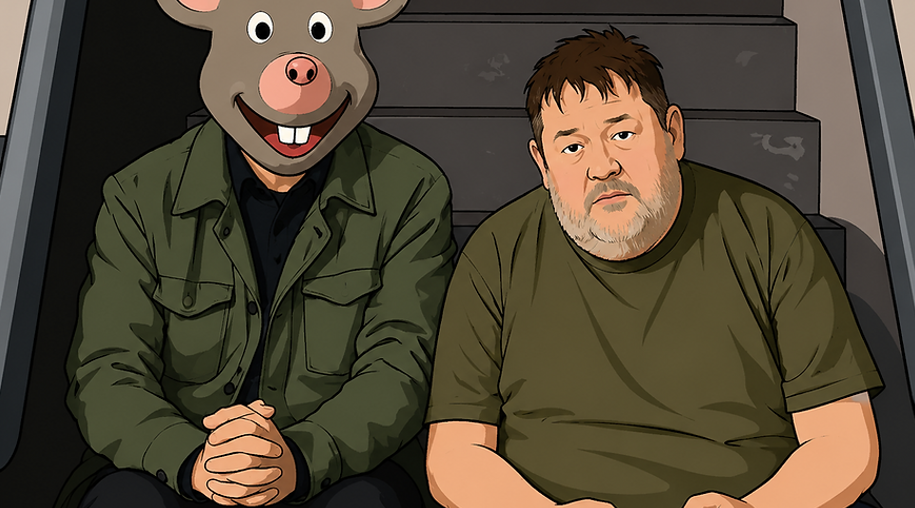
To understand this shift, I interviewed Graham Duff, whose series Ideal (BBC Three, 2005-2011), starring Johnny Vegas, set in a seedy Salford apartment, resonated with young audiences, and turned out to be a long-running hit. Ideal was so popular it gained interest from Hollywood, including from Janeane Garofalo who joined the series in a supporting role as Tilly, an American neighbor. As Duff explained to me, other series like Shameless (Channel Four) portrayed working-class people comically as “grotesques,” but he wanted to portray an insular, complex working class subculture, whereby rounded characters.
It began as a character he created in Duff’s stand-up career; Moz, a cannabis dealer living in squalor, deep within the underworld of the DJ scene. Untypical of BBC comedy series, music was a driving force in its creation – Duff used tracks by “underground” bands to inspire his writing of scenes (the music came first).
Its innovation is underlined by the apprehension of some BBC executives who regarded the Ideal concept as “risky” at the time – they were nervous about portraying a “relatable” drug dealer. To help reduce the perceived risk, the BBC wanted a familiar face to star, and it was producer Henry Normal of Baby Cow who suggested the visceral, Northern, working-class comedian Johhny Vegas, who played the leading role. As Duff explained to me, Vegas was “edgy” but famous enough at the time to appease executives who thought the combination would work.
Famalam: Anarchic Comedy
BBC Three also broke with the official culture’s “norms” of black British comedy which had governed BBC series like The Real McCoy (BBC Two, 1991 – 1996), and the works of Lenny Henry, who dominated BBC schedules through the ongoing, continued revivals of his series, The Lenny Henry Show (BBC One, 1984-1988, 1994-1995, 2004-2005). Those shows asserted the “difference” of black characters in British culture, confronting misconceptions yet fundamentally depending on perceptions of cultural difference.
In contrast to this “official” BBC comedy tradition, Akemnji Ndifornyen created Famalam (BBC Three, 2018-2020) drew on a completely different approach – it was anarchy and hilarity first, inspired by Leigh Francis’s performance of black characters in his outrageous, original series Bo Selecta! (Channel Four, 2002-2004).
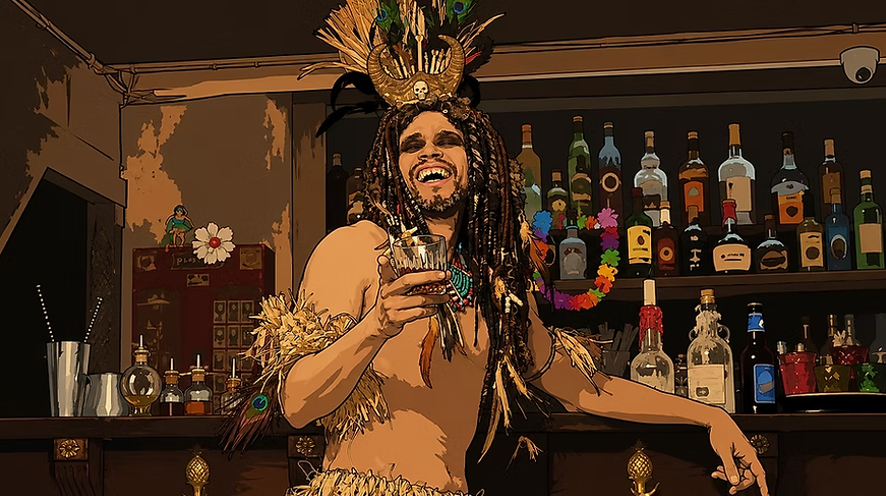
By result, Famalam totally negated “us”/“them” differences, instead portraying identities as playful hybrids. This was all inspired by Francis, who fused expressly white, working-class, regional British cultures with urban, black British celebrities (his notorious performance of R&B artist Craig David included a kestrel borrowed from the realist Yorkshire film Kes – a powerful and hilarious fusion, more in the spirit of modern Britain itself). Famalam echoed this cultural-hybrid approach, evident in skits about a British-African witchdoctor living in Croydon.
This creative innovation is also a result of technological change, reshaping distribution. Famalam was produced by BBC Three under the radar; unnoticed by the “official culture.” It completed its entire broadcast run during a strange period resulting from Prime Minister David Cameron’s “austerity” program, in which BBC Three had been taken off linear broadcast, instead available only via iPlayer. This “streaming-only” period was designed to save the channel from sale to a third party, advocated for powerful in a public letter by then-Controller Damien Kavanagh.
It is my finding that the resulting niche viewing opportunity, keeping the Famalam series visible for interested audiences only, allowed it greater creative scope. It was the freedom to risk offense – a freedom it still enjoys on YouTube, where scenes from the show still circulate, acquiring views and delighted comments.
Global Britishness
Later on, BBC Three’s comedy promoted a new kind of Britishness that more “global” in its sentiment, abandoning old ideas of “us”/ “them.” This was clear with the second-generation immigrant series Guz Khan’s Man Like Mobeen (BBC Three, 2017-2025) and the many series featuring Romesh Ranganathan, beginning with Asian Provocateur (BBC Three, 2015-2016). These shows portrayed Britishness as inherently transcultural and connected deeply to the outside world.
No longer was Britishness defined by its announced difference” to foreign others (in stark contrast to “classic” BBC characters like Alf Garnett in Til Death Do US Part, or Jim Davidson’s popular character “Chalky White”, which all relied on a strong conception of “us”/”them”). Instead, the performances by Khan and Ranganathan stood out for belonging to British and foreign cultures at the same time.
The British press, and local fans according to the Birmingham Mail, all loved Man Like Mobeen for its highly realistic portrayal of a rounded and unfiltered British Pakistani-Muslim experience. In contrast to the BBC’s earlier, performative show Citizen Khan, the character Mobeen reflected modern concerns; the struggles of urban living, a broken home, poverty, crime, reveling in local colloquialisms and humor.
While being wholly British, Mobeen also participated in traditions from Pakistan, like arranged marriage and attending his local mosque. Even his clothing, often noted by the press, was transcultural; his “cool” urban cap and trainers were complimented by his long, quilted jacket – yet his jacket echoes traditional Pakistani attire, and his pronounced beard bellows tradition.
In a very similar way, the BBC made Romesh Ranganathan a star, beginning with his travel show Asian Provocateur. In a dramatic change to the “nationalistic” tone of BBC travel shows, from those with Michael Palin to the hosts of Top Gear, Ranganathan was a “global” figure. He was praised in the press for giving new visibility to what he himself refers to as a “coconut” identity. In contrast to the “mainstream” of BBC travelers, Ranganathan was compassionate to foreign cultures, and supremely “global” in his identity.
This was most clear in press reactions to his episodes traveling in Sri Lanka and even Zimbabwe (poignantly, both former British colonies). As Ranganathan interacts with the local people, his comic asides were humble, and aware of his own origins – he mocks himself for not being adaptable to their unusual rituals, rather than “looking down” on the foreigners. In this new dynamic, Britons were suggested to be part of a “global community,” equal and connected to all others – letting go of lingering feelings of British superiority which had been the legacy of Britain’s imperial past.
If you’d like to know more about this BBC history (including how Brexit impacted things), you can look at my book, BBC Television Comedy Since the 2000s: Corporate Innovation and Changing National Identity by clicking here. And please do email me to discuss: symonsa.phd@gmail.com
__________________________________________________________________________________
Alex Symons PhD is a media researcher and commentator, who speaks at leading institutions including the American Sociological Association, the Popular Culture Association, Film & History, Critical Studies in Television, the International Communication Association, the Fan Studies Network North America, and the City University of New York, and in media appearances including The British Broadcasting Century Podcast with Paul Kerensa. He received his doctorate from the University of Nottingham and is Associate Professor in Communication and Media Studies at LIM College in New York City. He is the author of several media studies monographs and numerous book chapters and articles in journals, including the Journal of Popular Film and Television and Celebrity Studies. He is a regular peer reviewer and an editorial board member for the Journal of Popular Culture. He now posts on YouTube and Substack as alexsymonsphd.
Works Cited
Medhurst, Andy (2007). A National Joke: Popular Comedy and English Cultural Identities. London: Routledge.
Mills, Brett (2022), “‘The Popular Entertainment Side of Broadcasting Should Receive Much More Attention’: The BBC, Comedy, and Nation-Building at Home and Abroad,” Critical Studies in Television, 0.0, 1–17, https://journals.sagepub.com/doi/10.1177/17496020221119412
Symons, Alex (2026), BBC Television Comedy Since the 2000s: Corporate Innovation and Changing National Identity. London: Routledge, https://doi.org/10.4324/9781003770770