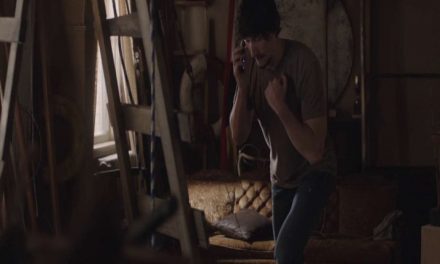
Timing does often seem to be everything, particularly when there is a very limited foreknowledge of events. The production team of the second series of The Night Manager (BBC 2016-?) certainly had no way of knowing that their Colombian-set (and partially-shot) spy drama would air not long after the US government opted to engage in regime change in neighbouring Venezuela (Isidore and Cancryn 2026). No doubt the location was chosen in part due to it having been the original setting of the final sections of Le Carre’s novel, as well as the filming incentives offered by the Colombian government. Colombia’s security situation has somewhat improved as well since 2016. All of this provides context for the very strongly anti-colonial themes of the series. Analysing them in full would take far longer than my allotted word count (I am rather verbose)[i] so, instead, I would focus upon one aspect of anti-colonial movements that is often overlooked: the impact of sexual orientation.
For those unfamiliar with the series, the original followed hotel night manager-turned-British-intelligence-agent Jonathan Pine (Tom Hiddleston) who infiltrated the entourage of arms merchant Richard Onslow Roper (Hugh Laurie) at the behest of then-MI6 leader Angela Burr (Olivia Coleman). That series ended with Roper being taken off to presumed-death by Syrians he was unable to pay. Series two begins nine years later. Burr has retired, Pine watches people on CCTV and other footage to attempt to find threats and Roper had been declared dead four years prior.
Any of you who have seen a spy drama can probably guess what happens next, but spoilers anyway (sorry) for the rest of the way through.

Los enamorados y la chaperona.
Roper is not dead, having faked his death through coercing Burr with threats to her daughter’s safety. Roper arranged a rather long-term plan with his Syrian creditors to repay them through, amongst other things, recruiting a child army out of Colombian orphans who would start a civil war which would also benefit Britain regarding geopolitical power and status (it is complicated; just go with it). He is working with the new head of MI6, Mayra Cavendish (Indira Varma), as well as with his illegitimate son Eduardo Dos Santos (Diego Calva), who goes by Teddy, and an import/export businesswoman based in Miami, Roxana Bolaños (Camila Morrone). Pine, working in London, sees a former associate of Roper’s and, as such, falls back into old habits of trying to take Roper down.
This, as you might expect, goes badly.
Without spoiling things overmuch, by the end of series two, Roper is alive, well and living in Oxfordshire, Teddy and Burr are both dead and Pine is gravely wounded and passes out in the middle of an escape from Roper’s men. Given the structure of this and other spy dramas, one assumes that Pine at least is still alive, particularly as Burr’s last phone call to someone sets up a sequel. That the (anti)heroes lose is also not uncommon– in addition to avoiding a white saviour/’white knight’ narrative, given that the series so clearly positions the plot as Britain attempting to re-establish itself through an imperialist exercise backed by those with money and power, a victory for the protagonists seems somehow beyond belief. So, instead, I would like to look at the relationship between Pine and Teddy and how that relates to the anti-colonialist theme. In the first series, Pine falls in love with Roper’s girlfriend, an American woman named Jed (Elizabeth Debicki). She ultimately helps Pine, having fallen in love with him, by betraying Roper. In series two, Roper’s son Teddy is closeted. He also self-harms, though it is unclear if that is from the moral injuries incurred through his work for his father (building a child army and killing on Roper’s behalf) or because he was raised in a Catholic monastery while being gay. Regardless, from the similarity of names one can expect that Teddy, like Jed, would fall in love with Pine, which is exactly what happens.[ii]
In the first series, and then again in dialogue in the second, Pine very clearly is in love with Jed. Pine actively works Teddy to get him to turn against Roper, but through performance and particularly touch, it is strongly implied that Pine reciprocates the attraction. Both characters often look at each other, and the shots are set up to facilitate this. Both dance together, with Roxana[iii] between them, but the camera focuses specifically upon Teddy and Pine. During the final episode, Teddy is ostensibly interrogating or torturing Pine but is actually treating his wounds; the characters not only have an emotionally intimate conversation but Pine touches Teddy’s cheek in a clearly intimate gesture. It is, of course, important to recognise that Pine has been using Teddy, which can cast doubt on his feelings as well as raising ethical issues regarding romantic or sexual relationships, but when Roper executes Teddy in front of him, Pine is clearly devastated. There is no advantage to the character in maintaining a fiction about having an emotional connection to Teddy at this point, so it does imply that this connection is genuine.
You may be wondering why all of this is relevant, other than my obvious research interests in queer masculinities. Le Carre’s antiheroes often have an ambiguous sexuality, so Pine being shown to possibly be bisexual is not that surprising[iv] and, as Parsemain (2019) notes, queer characters are often included as a mark of quality television. Yet looking at it within the wider, anti-colonialist and anti-imperialist context of the series, it is very clear that they are also incorporating the fact that queer liberation often accompanied anti-colonial movements (Aldrich 2003). I have also addressed elsewhere British television’s (ambivalent) engagement with its own colonial sodomy laws being responsible for postcolonial homophobia (Beattie 2023); Colombia was, of course, a Spanish colony rather than British and enshrined same-sex marriage into law in 2016, though Choi et al (2020) found that gay and bisexual men still face stigma and potentially homophobic violence in the country. Thus, Teddy’s choice to remain closeted can be read as expressing a contemporary reality as well as a resistance to colonialist homophobia, allowing for the character, series and relationship with Pine to be read in multiple ways depending upon if one reads Pine’s attraction as genuine or as purely manipulation (i.e., Britain screwing over a subaltern). Though not quite taking responsibility for the impact of colonialism directly, this does represent an improvement or at least an acknowledgement. Whether this is built upon on a presumed series three is, as yet, unclear.
Just as Roper and the British government are positioned as elite, aristocratic imperialists who refuse to believe that the sun has really set on the British Empire and who think of Colombians (and, by extension, non-white/non-Western people) as being uncivilised and unfit for British elite society, Pine, his Londoner assistant Sally (Hayley Squires) and his Colombian associates are positioned– explicitly stated, in 2.6– as trying to protect Colombian sovereignty from British imperialism with all of the geopolitical, sociopolitical and sociocultural power imbalances inherent in that goal. Despite Victorian fears of ‘contamination’ (Pearson and Singer 2016), The Night Manager series two makes it very clear that it is the imperialists and neo-colonisers who corrupt those they control, whether as a father or a king or a government. In so doing, though space can be left for love, it rarely seems to end with the loving couple riding off into the sunset to live happily ever after.
_______________________________________________________________________________
Dr Melissa Beattie is a recovering Classicist who was awarded a PhD in Theatre, Film and TV Studies from Aberystwyth University where she studied Torchwood and national identity through fan/audience research as well as textual analysis. She has published and presented several papers relating to transnational television, audience research and/or national identity. She is currently an independent scholar. She is under contract with Lexington/Bloomsbury for an academic book on fictitious countries and Palgrave for a book on Canadian crime dramas. She has previously worked at universities in the US, Korea, Pakistan, Armenia, Ethiopia, Cambodia and Morocco. She can be contacted at tritogeneia@aol.com.
References
Aldrich R (2003) Colonialism and Homosexuality. London: Routledge.
Beattie M (2023) ‘Something Else’?: International Co-Production, Postcolonial Crime Fiction and the Representation of Sexual Orientation in The No. 1 Ladies’ Detective Agency TV Series. Media, Culture and Society. Online first, https://journals.sagepub.com/doi/10.1177/01634437231179367 .
Choi SK Divsalar S Flórez-Donado J Kittle K Lin A Meyer I H and Torres-Salazar P (2020) Stress, Health, and Wellbeing of LGBT People in Colombia: Results from a National Survey. Los Angeles: Williams Institute, UCLA School of Law.
Isidore C and A Cancryn (2026) Why the Trump administration is holding millions of dollars from Venezuelan oil sales in a Qatari bank. CNN.com (15 January). https://edition.cnn.com/2026/01/15/business/qatar-venezuela-oil-sale-account (accessed 2 Feb 2026).
Parsemain A L (2019) The Pedagogy of Queer TV. Houndmills: Palgrave Entertainment Industries.
Pearson N and M Singer (2016) Open Cases: Detection, (Post)modernity, and the State. In Detective Fiction in a Postcolonial and Transnational World, edited by Nels Pearson and Marc Singer. London: Routledge. 1-14.
[i] Pity my long-suffering editors!
[ii] Pine’s initial help in London comes from Basil (Paul Chahidi), a gay British-Iranian higher-up in MI6 who is eventually killed by Mayra. From some of the dialogue one can read Roper as also being in love with Pine– possibly reciprocated– though it is not made as explicit.
[iii] Alexander the Great, who was either bisexual or gay, married the Sogdian (or Bactrian) princess Roxane for political reasons.
[iv] Hiddleston being known for playing Loki in the MCU, who is bisexual and genderfluid yet never shown in a romantic relationship with another man, can also paratextually reinforce this ambiguity.