
In 1991, comedian (and trained engineer) Steve Smith debuted The Red Green Show (CBC, 1991-2006), a long-running Canadian comedy series in the style of a cable access series which follows the members of ‘Possum Lodge,’ a men’s club headquartered in a cabin in the Northern Canadian woods. Each episode features a series of segments meant to give life advice to other men, to play games or to otherwise discuss whatever theme each episode is built round. Rather than the club being misogynistic, the lodge members are hapless, harmless eccentrics who enjoy each other’s company and being outdoors. While nature is commonly associated with Canadian national identity (Beattie 2020, 2025), in this blog I would like to focus upon two ways in which the series engages with different aspects of Canadian masculinities. The first of these is the titular Red Green’s penchant for building devices which ostensibly are labour-saving but generally malfunction or are otherwise poorly-thought-out. Gelber (1997) notes the long history of DIY as being linked to masculinity, with Hanke (1998) noting that ‘mock-macho’ series such as the contemporaneous American DIY-centric sitcom Home Improvement (CBS 1991-1999) find humour in illustrating ‘masculinity as a gender performance’ (74). Hanke (1998) further notes that the gender politics are somewhat ambivalent:
Neocynical humour works to serve male agency by delaying the truth of male power, understood as collective cultural power imbricated in the reproduction of gender hierarchy and inequality. Because the butts of “mock-macho” humor—individual men—are represented as absurdly incongruous, this discursive strategy recuperates patriarchal notions and updates masculinity by putting the signs of masculinity into co-motion with the shifting horizon of our expectations and values. …”mock-macho” humour suggests that there is no primary or stable meaning of “masculinity,” nor is there a single, functional relationship between gender and humor… Thus, “mock-macho” humor is structured to appeal to different perceptions of “masculinity” and its discontents/adherents (90).
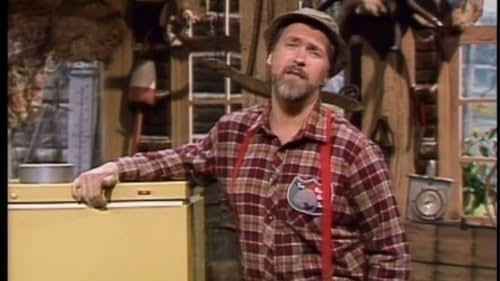
Tinic (2005) also notes the associations between Canadian television, Canadian national identity and the subversiveness of satire. While Red Green is far more parody than satire, it still clearly functions subversively in that Red Green takes a slightly different approach from the above by eschewing the idea of machismo and instead satirising the rural idyll and its perceived connections to masculinity. Red’s attempts at inventions are usually intended to reduce work, part of the idyll, yet often either do not work at all or lead to additional work or cost. Yet this is juxtaposed not necessarily with Red’s dry yet avuncular masculinity but instead with Smith’s own engineering skill. By crossing the boundaries of the text, Smith-as-perceived-author is clearly in on the joke of Red’s ineptitude which simultaneously emphasises Smith and the production team’s intelligence. It does certainly appeal to multiple perceptions of masculinity/-ties but it seems to subvert or at least question male agency without resorting to sexist or otherwise offensive machismo.[i]
One can perhaps view this subversive (ish) representation of masculinity as a form of social progressiveness; my previous research shows that to be a key part of Canadianness for many (Beattie 2020, 2025). Yet nature, the outdoors and environmentalism is also often connected to the construction of Canadian national identity. This brings me to the second aspect of the series’ representation, that of Ranger Gord (Peter Keleghan). As is clear, Gord is a ranger in the Canadian Forest Service whose job involves protecting a defined area which includes Possum Lodge. He lives in a ranger station set high in a tree and positions himself to Red and the other lodge members as being extremely knowledgeable and steadfast in his duties. His own self-conception, as seen in the animated clip below from the series, is clearly that of a hypermasculine hero protecting his woodland creature friends; juxtaposed against the live-action series it is clear that it is self-delusion yet still illustrates how important these friendships are.
One of Ranger Gord’s many animated ‘educational’ films.
Each time we see Gord outside the (infrequent) cartoons, he is either shown to be desperately lonely in his isolated station, to the point of occasional emotional or psychological breakdowns and/or is shown to be completely incompetent.[ii] Rather than the juxtaposition between Smith and Red, in this iteration Gord represents the subversion of the (specious) connection between men, masculinity and the rural/forested environment. Gord’s mental health is severely negatively impacted by his isolation. Yet it is also important to note that, while Gord is absolutely an absurd figure, as are most of the characters, he is treated sympathetically. There is a pathos to Keleghan’s performance that helps ground the character in an exaggerated but not entirely caricatured emotional realism. Red and the other members of the lodge, though clearly aware of Gord’s deficiencies, are broadly supportive of him, including through Red’s frequent visits to the ranger station. Thus, the series not only subverts the idea of hypermasculinity/machismo relating to the outdoors, but it also illustrates that the physical and emotional isolation it seems to require and feed upon is toxic, with acceptance, support and friendship as the only balm.
Thanks to a new, completely animated series, Red Green, Ranger Gord and all the denizens of Possum Lodge have the chance for new adventures and to be introduced to new audiences. Then and now, every episode ends with Red asking the viewers to tell his wife he will soon return home and a recitation of the ‘Man’s Prayer’– ‘I’m a man and I can change. If I have to. I guess’ – to begin an unseen lodge meeting. This acknowledgement of male agency, even if reluctant, as well as the fact that, though each male character is exaggerated in different ways they are all exaggerated, operate against Hanke’s (1998) assessment of American mock-macho’ series.[iii] It is, at least diegetically, not ‘individual men’ who are the subject of parody but instead men and dominant/hegemonic masculinity in general. While the differences between Canadian and American media are a subject of my ongoing research,[iv] there is a clear distinction between The Red Green Show and Home Improvement. The latter relies upon an individual’s foibles and incompetence with a nuclear family as amused (and often uncredited) support. The former, by contrast, relies upon a group of supportive, outlandish and subversively incompetent male friends. What all of this does is to reinforce the importance to, as Red puts it after each of his ‘North of Forty’ segments, ‘[r]emember: I’m pulling for you. We’re all in this together.’ That routine show of collective support seems to be the most useful thing Red (and Smith) has created.
________________________________________________________________________________
Dr Melissa Beattie is a recovering Classicist who was awarded a PhD in Theatre, Film and TV Studies from Aberystwyth University where she studied Torchwood and national identity through fan/audience research as well as textual analysis. She has published and presented several papers relating to transnational television, audience research and/or national identity. She is currently an independent scholar. She is under contract with Lexington/Bloomsbury for an academic book on fictitious countries and Palgrave for a book on Canadian crime dramas. She has previously worked at universities in the US, Korea, Pakistan, Armenia, Ethiopia, Cambodia and Morocco. She can be contacted at tritogeneia@aol.com.
References
Beattie M (2025) ‘Everything to everyone?’: Canadian national identity and the Barenaked Ladies. Participations 21(1): 157-173.
Beattie M (2020) ‘Like an American but without a gun’?: Canadian national identity and the Kids in the Hall. Participations 17(2): 3-24.
Gelber S M (1997) Do-It-Yourself: Constructing, repairing and maintaining domestic masculinity. American Quarterly 49(1): 66–112.
Hanke R (1998) The “mock‐macho” situation comedy: Hegemonic masculinity and its reiteration, Western Journal of Communication 62(1): 74-93.
Tinic, S. (2005) On Location: Canada’s Television Industry in a Global Market. Toronto: University Of Toronto Press.
[i] In an episode from 2001 in which one of the lodge members fixates on finding an heir, he, Red and several other members go (off-camera) to what turns out to be a Pride event. The context of the episode and performances make it clear that the series supports LGBTQIA rights.
[ii] Gord’s final episode features him inadvertently starting a wildfire.
[iii] Female characters rarely appear, though when women are discussed the characters are not explicitly sexist. The absence seems more to retain focus upon subversion of different masculinities without setting up an explicit (and fallacious) gender binary.
[iv] I have a book under contract with Palgrave on Canadian crime dramas (full MS due 31 March).