In December last year, the UK Government published the Green Paper setting out its plans for the new – and hopefully more permanent – BBC Charter. The process is now in the Inquiry Stage, with the relevant Committee hearing evidence from a range of experts until August 2026. This has ushered in a period of great debate between different lobby groups from the whole range of the political spectrum. Each group provide their own thoughts through reports and responses on how the BBC should be run and what it should deliver. Pretty much all these lobbying groups, including from the political right, want to see the BBC remain a public service broadcaster – a form of broadcaster that was first fully articulated by John Reith, the man who for many years dominated the BBC’s imagination. His vision, which he laid out in front of a parliamentary inquiry into broadcasting in 1925, became fundamental to what public service broadcasting has become across the world. This vision is often summarised as ‘inform, educate and entertain.’ In addition, Reith recognised the role of the BBC in shaping the collective national imagination (‘make the nation into one man’). Together, his ideas remain the fundamental principles underlying the five current public purposes.
What sounds noble does however not come without problems: as Raymond Williams for example highlighted, while ‘the least bad form of broadcasting,’ Reith’s vision imagines a large number of people as ‘backward, as having many of the characteristics of children, as being deprived, as being in many ways unfortunate and ill-equipped,’ or, as Nico Carpentier and Vaia Doudaki put it more succinctly, as ‘stupid.’ This is a charge widely repeated in critiques of the paternalistic model of public service broadcasting. Its origins lie, as David Hendy has pointed out, in the influence of Matthew Arnold’s Culture and Anarchy which was fundamentally concerned with the class divide of the 19th century and how it could be overcome. Unfortunately, Arnold did not think very highly of the lower classes and was worried about the constant threat of mass unrest. This could only be avoided, in his eyes, by developing both people’s knowledge and their discernment: their ability to judge what was good and what was bad.
The latter is interesting in the contemporary context: a key theme in the Green Paper and in the responses to it is the worry about mis- and disinformation. What citizen require, in the eyes of these commentators, including the UK Government, is an institution – i.e. the BBC – that can offer accurate and impartial news so that audiences can distinguish good from bad information. While Polly Toynbee argues in the choice-focused language of Neoliberalism that the BBC should be a source that people can turn to, the British Broadcasting Challenge offers a more paternalistic assessment where the BBC is meant to ‘counter disinformation as core public purpose.’ In comparison to those two positions, the UK Governments seems surprisingly citizen- and audience-centred: they point to the evident mistrust of some audiences in BBC content. To address this, they want to see the BBC consider how it can engage audiences on a more regular basis. This would also facilitate better representation of all UK audiences as is laid out in the current public purpose 5. In other words, the UK Government wants the audience to be regularly consulted on the content produced by the BBC.
In many ways, this can be seen as a positive development: it is the green shoots of a much more participatory democracy than the pure ‘voting’ that current UK democracy allows. But participation, as Nico Carpentier has so expertly laid out, comes on a scale, and consultation sits quite closely to the minimalist forms of participation (with voting or choosing one media source over the other at the very minimalist end). Engaging audiences in content production – either through co-design or handing over the equipment itself – as the BBC has actually done through Video Nations or, more recently, the audience segments on Gardeners’ World – allows audiences to bring in their own knowledge, set the parameters of the debate and highlight things that programme makers might otherwise overlook. When Belinda Tyrrell and I did just that with audiences in Liverpool in 2022, we found that their mistrust and disengagement with the media, which was based on the fact that they felt their concerns were precisely not represented, were replaced by a sense of hope and validation. Giving them through the co-design of programme production a voice gave them the energy to continue the good work they were doing, and it made them believe in a fairer, more cohesive and more participatory future. Interestingly, the Green Paper seems to advocate for such engagement at local level, though remains quite vague for the time being.
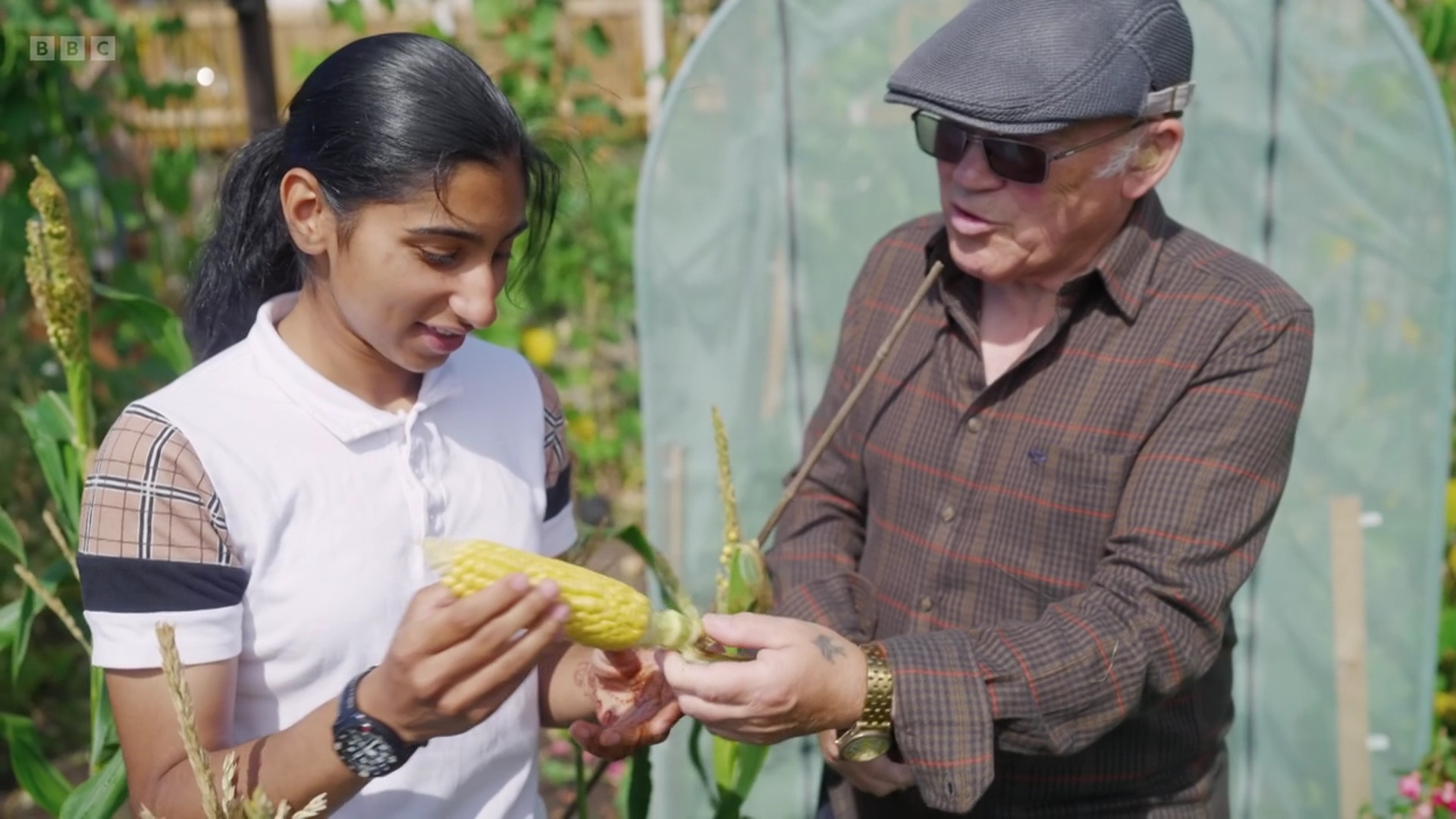
A programme that takes the knowledge of its viewers seriously is Gardeners’ World which regularly features ordinary people, and during and after COVID, invited them to send in their own little films.
Thus, the Green Paper takes the first mini-steps into the directions of this future, but for the time being, it, as well as most of the responses, with the exception of the Media Reform Coalition, do not come anywhere near it. Instead, by asking the BBC to act as a bulwark against dis- and misinformation and not giving the audience the opportunity to meaningfully participate, including in the regulation of mis- and disinformation on the social media platforms by returning community notes, the Green Paper(s) and the responses, without their evident awareness, continue to essentially label the audience as stupid.
________________________________________________________________________________________________
Elke Weissmann is Reader in Film and Television at Edge Hill University. She’s published a few books on transnational television drama and has written a few articles and chapters on feminism and TV and climate change and TV. She is an ECREA editor for Critical Studies in Television. She is currently co-editing a book with David Levente Palatinus on TV and Sustainability. She migrated to the UK in 2002 after realising that German television was as bad as she remembered.