Remake: a word that can spark excitement or send a shiver down a fan’s spine. I am in the latter camp, as the news that two series that I hold in high regard – The Avengers (1961-1969) and Blake’s 7 (1978-1981) – are in line for the remake treatment has filled me with a sense of dread.
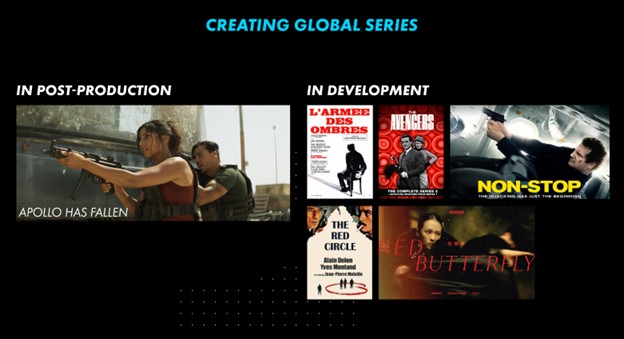
Fig. 1: News of StudioCanal’s plan to reboot The Avengers initially broke in 2024. After a long period of silence, the project was confirmed to be still in development by a comment made during the company’s May 29, 2026, general meeting and a mention in the meeting’s associated documentation (as shown above).
But why? What is it about the term “remake” – or “reboot”, “reimagining”, or any other word that signifies the creation of a new version of an existing property – that makes fans blanch? From a strictly logical standpoint, there is nothing to fear. The remake will not negate the existence of the original. There is no requirement to watch the new version. Remakes may reinvigorate the existing fandom by providing the impetus for the production of new original series physical releases and merchandise and introducing more people to the source material. If all of these things are true, why do remakes make fans’ skin crawl?
The reasons behind an individual’s reaction to a remake will obviously vary, but I can identify some likely candidates. The most obvious is that fans dislike any changes made by a remake to their favourite show and perceive those changes as disrespectful to the source material and those who made it. Even changes made to bring the remake closer to the original creatives’ vision for the show – which may have been foiled due to the budgetary, production, censorship, or technological constraints of the period – may not be accepted because they deviate from the make-up of the original that fans have come to know and love. In some cases, fans may also interpret a remake’s changes as a sign that the creatives do not understand the original and have not bothered to research it properly, and will therefore be annoyed that their favourite show is being treated lackadaisically. If the changes are so substantial that the remake’s resemblance to the original is slight, fans may also suspect and be annoyed that the creatives are exploiting the original series’ title and character names to attract an audience and revenue to what was originally conceived as a show with no connection to a legacy property. Ironically, fans may also be irked if a remake is virtually identical to the original, as the remake will then be perceived as both pointless – why watch a carbon copy when the original exists? – and as a lazy attempt to exploit fans by cashing in on an existing property. Fans may therefore take exception to a remake because of the changes – or lack thereof – that it makes to the original and interpret them as evidence that they and their favourite show are being exploited and/or disrespected.
Remakes may also attract hostility from fans because they affect their enjoyment of the original series. Since the two shows share their setting, premise, and characters, remakes allow for the original show’s production standards, acting quality, content, social mores, etc., to be compared to those of a modern-day equivalent. After watching the remake, fans may find this comparison results in the original’s imperfections, questionable content, production limitations, etc., becoming more noticeable than they were when the original show was watched in isolation. This comparison may therefore taint what was once a carefree watch. A remake’s negative alteration of the original show’s characters and universe may also mar fans’ enjoyment of the original show by causing them to view it through the lens of those changes. For example, the 2000-2001 remake of Randall and Hopkirk (Deceased) (1969-1970) transformed the ghostly detective Marty Hopkirk into an unpleasant individual who is vain, obnoxious, and sloughs off work onto his partner and best friend, Jeff Randall. The remake Marty is also an unethical hypocrite, warning Jeff to not take any romantic interest in his fiancée, Jeannie, and expecting her to forsake all others after his death, while he enjoys a supernatural assignation with another woman and, horrifyingly, possesses Jeff’s body in order to attempt to force himself on Jeannie. While the original Marty, admittedly, had a jealous streak when it came to his wife, he was very faithful to her even in death, to the point of turning away when he was required to be in the same room as a woman who was changing clothes and guiltily retracting the arm he had stretched behind a woman he was sitting next to when Jeannie entered the room. The original Marty also did not engage in the gross violations of personal autonomy committed by his remake counterpart. He directed a hypnotised Jeff’s movements, but only did this in order to help Jeff escape from the institution in which he was imprisoned and prevent a crime. Marty also passed messages on via individuals who were in an altered state of consciousness or were otherwise able to see him, but never impacted their personal autonomy more than was required by what was typically an emergency situation. The remake also discarded the original’s unique mix of good-hearted comedy, supernatural antics, and grounded, perilous detective yarns in favour of a darker, more twisted sensibility that valued strangeness for strangeness’ sake. Watching the remake may colour one’s perception of the original, particularly in relation to Marty, whom one may imagine acting in the unsavoury manner of his remake counterpart. Worse still, since it is reasonable to assume there is some kernel of the original at the core of each aspect of the remake, viewers may wonder whether their original impression of who Marty is as a person was wrong, and if the people behind the remake picked up on and depicted some heretofore hidden layer of his personality. The remake may therefore evoke hostility by negatively altering fans’ perspectives on the original.
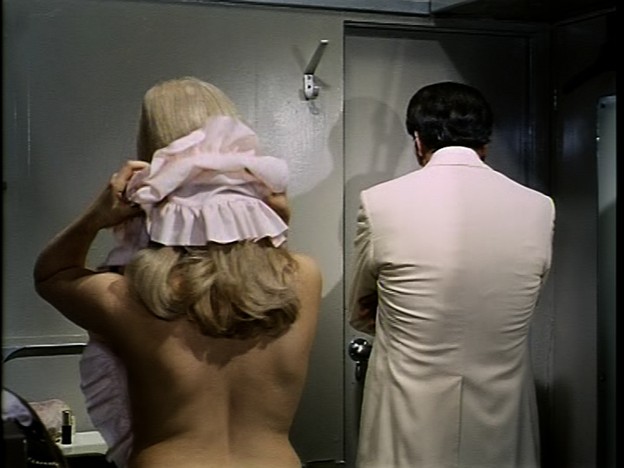
Fig. 2: A mortified Marty turns his back while his surveillance subject changes her clothes in order to protect her privacy and respect his wedding vows to his widow in “A Sentimental Journey”…
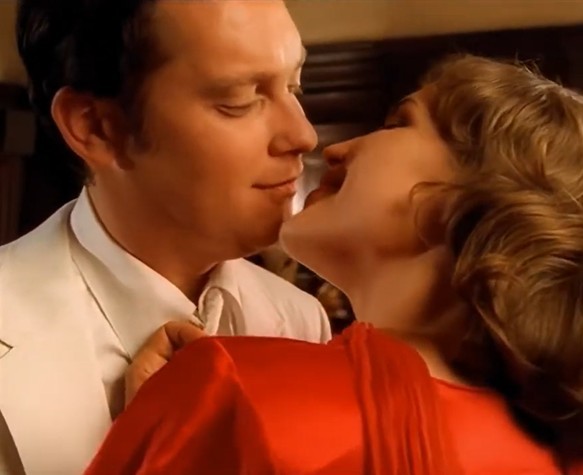
Fig.3: …while, in “A Man of Substance”, his remake counterpart enjoys a liaison with another woman despite opposing his fiancée, Jeannie, taking up with anyone else after his death.
Television remakes of television shows may also be harshly judged by fans because they exist in the same medium as the original. Fans may bemoan the changes made to a book, graphic novel, audio drama, etc., when it is translated to the screen, but will typically understand that a straight adaptation is not possible. Indeed, being overly faithful to the original may result in a poorer onscreen product. For example, critics, such as Newsweek’s Devin Gordon, suggested that one issue with the 2009 film version of the graphic novel Watchmen – which received mixed reviews and underperformed at the box office – was that its creatives focussed on replicating specific panels of the comic instead of on making a good movie:
“From its opening moments, [director Zack Snyder’s] movie is meticulous, even slavish, in its re-creation of [Dave] Gibbons’s imagery, from colors to costumes to composition. Entire sequences are preserved, frame by frame…But is that a good thing? Speaking as an admirer, but not an apostle, of the graphic novel, I thought the Watchmen movie was confusing, maddeningly inconsistent and fighting a long, losing battle to establish an identity of its own. Writing for Slate.com about Revolutionary Road—another faulty page-to-screen adaptation—author Willing Davidson argues that Sam Mendes’s film is so faithful to the book that it ‘feels less directed than curated.’ Ditto for Watchmen.…That’s the trouble with loyalty. Too little, and you alienate your core fans. Too much, and you lose everyone—and everything—else.”
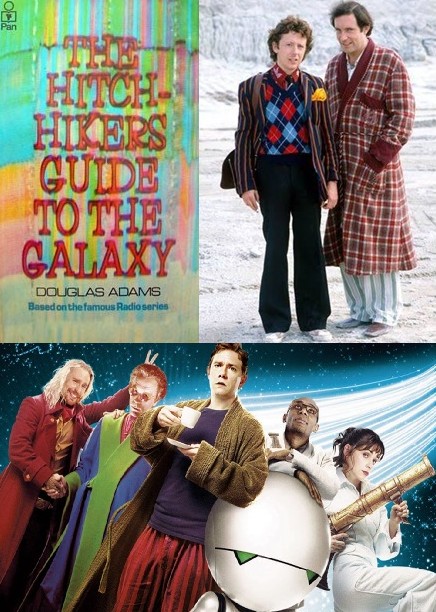
Fig. 4: Though it started life as a radio series, The Hitchhiker’s Guide to the Galaxy has been reimagined for a variety of mediums, with each version changing the story in ways large and small. While some versions, particularly the 2005 film, have been characterised as misfires by fans, Hitchhiker’s enthusiasts have been very accepting of the revisions made by quality entries, even when the changes did not originate from author Douglas Adams.
The Hitchhiker’s Guide to the Galaxy, in contrast, has translated, mostly successfully, from radio to a number of mediums – including novel, television, graphic novel, stage play, PC game, and film – by altering the story of ordinary Englishman Arthur Dent and his companions’ exploration of the universe after the destruction of Earth to meet the demands of each medium. Fans have not only understood that these changes are required, but considered every version to be akin to its own parallel universe in which the characters’ journeys went in a different direction. When television shows are remade as television shows, however, as in the case of Blake’s 7 and The Avengers, the medium does not necessitate changes. This means that any changes that are made by the remake may be met with bafflement and hostility by fans.
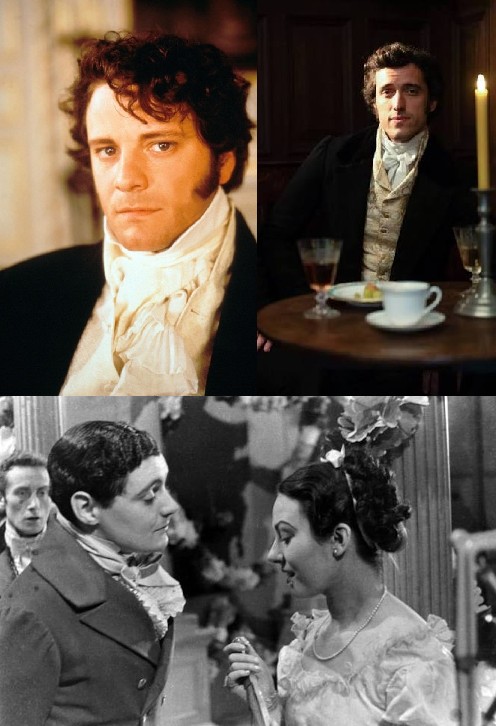
Fig. 5: Colin Firth is perhaps the most famous portrayer of Pride and Prejudice‘s Mr. Darcy on television. Andrew Osborn was the first to embody the character onscreen in any capacity with his appearance in a 1938 live television adaptation. Victor Pilard’s portrayal in The Other Bennet Sister is the most recent television depiction of Darcy. Regardless of the timing or popularity of the performance, no depiction is more valid than any other, as Darcy began life in a novel.
Fans may also perceive a property that originated offscreen as being “protected” when it is remade for the screen. For example, innumerable Jane Austen adaptations have been made for television and film, but the stories originated in books. The fact that the adaptations exist in a different medium than the novels prevents like-for-like comparisons between the novels and the adaptations that could tarnish the novels, and also prevents the novels from being supplanted by the adaptations in their home medium. This medium separation therefore enables the originals to remain aloof from the adaptations, while the various screen versions can be compared amongst themselves on an even footing, as they did not originate the story and therefore it is immaterial if they deviate from one another. The same logic applies to different actors playing a character that originated in another medium. Austen’s Mr. Darcy started life in books, so, while his different portrayers can be praised or criticized for their depictions, the book version remains the original and is insulated by its separate medium from like-for-like, tarnishing comparisons with, and supplantation by, its onscreen brethren. In contrast, each character in The Avengers and Blake’s 7 started life by being portrayed by a particular actor in a television show. Any subsequent onscreen portrayal of, for example, Blake’s 7’s coolly calculating Avon or The Avengers’ witty and intelligent Emma Peel can therefore be directly compared to the original performance, as both exist onscreen. While the two will not be on an even footing, as one will be the original incarnation, the remake version of the character can potentially compete and set up tarnishing comparisons with the original. Television remakes of television series therefore invite comparison with and threaten the original in ways that screen adaptations of non-screen properties do not.
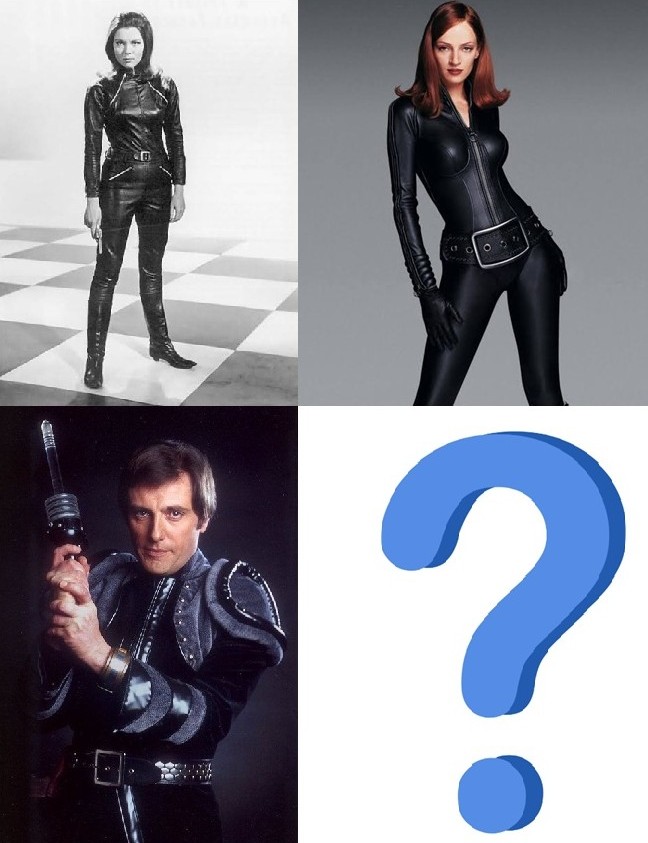
Fig. 6: Uma Thurman’s portrayal of Emma Peel in the 1998 Avengers movie was heavily criticized for not measuring up to Emma originator Diana Rigg’s performance. Who will have the unenviable task of following Paul Darrow as the cynical, self-serving wit that is Kerr Avon?
Differences in medium also explain why fans are more accepting of television tie-ins than remakes. Both Blake’s 7 and The Avengers have been the subject of numerous tie-ins over the years, including audio and radio dramas, novels, comic books and strips, and annuals containing short and illustrated stories. While opinions vary regarding the quality of these tie-ins, their mere existence did not provoke anything like the intensely negative reaction that greeted The Avengers’ 1998 movie version or the trepidation some Blake’s 7 fans are expressing in response to the remake news. As both tie-ins and remakes are typically made by people who were not involved in the production of the original show, and sometimes deviate significantly from the parameters of the original series in ethos and characterisation, why is one viewed more negatively than the other? The answer is that tie-ins differ from remakes in ways that work in their favour. First of all, tie-ins benefit from being in a different medium than the original in the same ways that adaptations do: fans understand that different mediums demand changes to the property’s elements (even if they do not like those changes), and the medium difference prevents the tie-in from replacing the original and a like-to-like comparison between the original and tie-in that may tarnish the original. Furthermore, tie-ins by their very nature are secondary to the show itself, mere satellites orbiting the mother planet, whereas a remake challenges the original by setting itself up as a central entity on equal footing with its forebear and risks upsetting fans in the process. In addition, unless it is declared canonical by the people behind the series, anything in a tie-in is a mere flight of fancy and can easily be ignored, meaning it is less likely than a remake – which will typically establish a canon of its own – to affect fans’ perceptions of the original or attract their ire by making changes to it. At the same time, tie-ins are more likely than remakes to hew closely to the original series in their presentation of its world and characters, to the point of using the original actors’ likenesses in illustrations and employing those actors to voice the characters in animation and audio dramas. Tie-ins can therefore present the show’s universe and characters just as we remember them, and are inconsequential enough that it does not matter if they do not. A remake, in contrast, challenges and competes with the original series’ presentation by putting forward a new canon and cast in the same medium as the original. Remakes therefore feel like a willful distortion of the original that is attempting to usurp the original’s status, whereas a tie-in is a mere add-on to the original’s story that can be safely ignored. This fundamental difference dictates fan reaction to both.
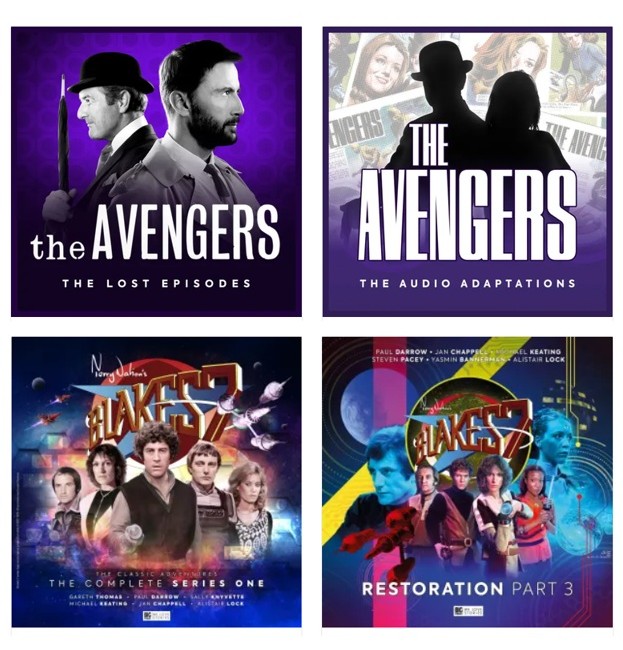
Fig. 7: Both The Avengers and Blake’s 7 have been the subject of numerous tie-ins, including audio dramas that tell new stories or adapt pre-existing scripts or other material featuring the characters. Many original members of the Blake’s 7 cast reprised their roles in audio, while the Avengers adaptations recast the roles, but, in both instances, relatively faithful depictions of the shows’ characters and universes in a non-television medium made these adventures easier for fans to accept than new television versions of the shows vying to replace the originals.
These are some of the factors that I believe shape fans’ perspectives on television remakes. Should the Blake’s 7 and Avengers remakes reach our screens, I hope they spawn a resurgence of interest in the original shows and attract new, younger fans. However, the creatives behind them have their work cut out for them when it comes to convincing existing fans that their favourite programs are in safe hands.
_____________________________________________________________________________________________________________________________
JZ Ferguson is an enthusiast of British popular culture with a particular affinity for television series of the sixties and seventies. She has written for all five, and co-edited two, of the volumes of The Avengers on Film series. She has also written for the Classic British Television Drama series, penning chapters on shows such as The Saint, Danger Man, The Persuaders!, and Gideon’s Way. Other volumes featuring her work include Man in a Suitcase: A Critical Guide, Swinging TV, Survival TV, New Waves, and A TV Box of Delights: A Golden Age of British Children’s TV. Escapades: An Exploration of Avengers Curiosities, co-authored with Alan Hayes, is available now from Quoit Media. She lives in Canada.